

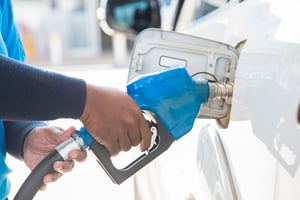
8,000 gallons of fuel delivered¹. That’s what the waybill said.
It was only during a routine security check that a security officer discovered a discrepancy between what was written on paper and what was sitting in the fuel tanker, which was now preparing to leave the mining site with a quarter of its delivery load still stored in one compartment.
In this case, human intervention stopped the theft of 2,000 gallons of fuel. But spend a day with any fleet manager or driver, and you see how impossible such a solution is when vehicles, drivers, and fuel activity are spread across multiple sites or remote locations.
In countries across Africa, stories of fuel theft regularly make the headlines. It’s also one of the top concerns we hear from partners whose clients are looking for easier ways to manage fuel and combat theft, especially as criminal activity becomes more organized.
Table of contents:
How telematics makes fuel theft prevention easier
Trip and driver behavior data
As fuel theft becomes more sophisticated, a single fuel reading or alert will not tell you enough to guarantee theft prevention in the long-term. But telematics makes it easier to detect possible manipulation by putting fuel activity in context with broader fleet data, such as:
-
Ignition status,
-
Vehicle maintenance schedules,
-
Vehicle location, and
Where was the vehicle? What was the driver doing? Has this happened before in the same location? What’s the ignition status of the vehicle? A telematics platform can establish the full picture around a fuel event.
Immediate alerts
In the 3Dtracking platform, users can configure a fuel sudden decrease alert to trigger when the recorded fuel level falls by a defined amount within a set period. For example, an alert could fire if fuel drops by 5 liters within 15 minutes. (The right threshold will depend on the vehicle, tank size, operating conditions, and quality of the fuel data).
Not only that, but alerts can fire if a vehicle heads into a no-go zone, if there’s a variance in a specific fuel sensor, or if a vehicle moves when it is not authorized to do so. Together, these alerts (and many others) help fleet managers move from discovering missing fuel after the fact to identifying suspicious activity as it happens.
Clear response process
An alert fires, but then what? That’s where an action list comes in.
A driver might hit their panic button if their fuel truck is ambushed. The control room receives the alert, but the action list specifies whether the control room staff call the driver, the police, or other emergency services.
Customizable action lists in the 3Dtracking platform define what should happen when suspicious activity is flagged, who needs to investigate, and what information should be recorded. Because what happens next can be just as important as what happened.
Seamless integration with physical security measures
Physical controls such as anti-siphoning devices and smart fuel caps provide an additional layer of protection at the point of access.
A telematic platform strengthens those controls by bringing their status into the same monitoring environment. For example, the 3Dtracking platform can integrate with monitored fuel tank locks and alert users when a lock changes from locked to unlocked. If this happens while a truck’s not meant to be refueling or delivering fuel, then teams will know something is wrong.
Precise record-keeping
A fuel log is a powerful preventative measure when companies are managing large fleets in various regions. Available in the 3Dtracking platform, it provides the transactional side of the fuel record so every drop of fuel and event is accounted for. Capabilities include:
-
capturing fuel receipts;
-
recording fuel quantity and cost;
-
associating purchases with specific vehicles; and
-
maintaining a centralized historical record of fuel purchases.
When fuel-log information is reviewed alongside actual fuel-level and consumption data, fleet operators can reconcile what was purchased with what happened in the vehicle. This can surface discrepancies.
Real time monitoring
Fuel theft is easier to miss when monitoring is irregular or relies on manual checks. Fleet clients can rely on a telematics platform to continuously monitor fuel levels across their vehicles, so unexpected changes are identified as they occur rather than only during a later reconciliation.
The objective is not to treat every change in fuel level as theft. It won’t be. The goal is to identify activity that falls outside the fleet's expected operating patterns and warrants further investigation.
Our platform’s reports, such as fuel sudden decrease and fuel consumption, provide a consolidated view of fuel usage and unusual events. If companies want to compare performance across trips, time periods, and vehicles, they can just run a report.
Fuel theft trends in Africa
-
Organized theft
Fuel theft is not always the work of an opportunistic thief. This year in KwaZulu-Natal, for example, an employee from the Department of Transport was arrested after allegedly being linked to a diesel theft syndicate that the department claimed was stealing more than R300,000 worth of fuel every month².
The investigation unearthed several theft methods, including employees allegedly colluding with fuel attendants, using government fuel cards for private vehicles, and stealing diesel intended for construction machinery. These fuel losses impeded road construction and maintenance work; without fuel, the projects could not continue.
In Kenya, a tip-off from a concerned citizen about potentially hazardous fuel spillage led the local Operations Support Unit to raid a compound. Officers confiscated a trailer, two fuel tankers, generators fitted with hosepipes, funnels, 20-liter jerrycans, and several tanks containing siphoned fuel. The suspects escaped, but the operation helped prevent what authorities said could have become a fatal explosion³.
How to fight it: Use live tracking, geofences, route deviation alerts, driver identification, and historical trip data to identify unusual vehicle movements or repeated patterns. Fuel-level alerts can also flag coordinated draining or unauthorized refueling.
2. Pipeline tampering
Fuel theft is not a vehicle problem; pipeline tampering, as one example, makes it a supply-chain issue as well. The financial loss is obvious, but the implications on the surrounding environment are also significant.
When criminals tamper with petroleum pipelines, they can expose entire communities to pressure loss, spills, fires, explosions, environmental contamination, and infrastructure damage. In Tanzania, pipeline tampering led to the theft of an estimated 705,300 liters of diesel from the TAZAMA pipeline between December 2023 and February 2024. Investigators found that the pipeline had been deliberately pierced and connected to a one-inch pipe leading to an underground storage tank at a nearby petrol station in Ruaha Mbuyuni, Iringa Region.
The incident caused both significant fuel losses and environmental pollution from oil spills; TAZAMA later sealed and repaired the damaged section to stop the leak.⁴
How to fight it: Combine GPS tracking of vehicles with geofenced infrastructure, sensor monitoring, and alerts around restricted or high-risk areas. Where pipeline or storage sensors are connected, abnormal fuel levels, flow changes, or activity outside expected operating times can trigger an immediate investigation.
3. Theft at remote sites and unsecured stops
Remote fuel theft is a familiar reality across many African countries. Trucks can spend nights away from a depot. Construction equipment may remain at rural project sites for months. Generators can sit at telecommunications sites with little permanent supervision. Municipal vehicles may travel far from central fleet facilities. And heavy equipment can carry enough diesel to make even a single theft financially worthwhile.
In Uganda, fuel theft has become a serious problem on the 103 km Koboko-Yumbe-Moyo road project. Zhongmei Engineering Group Limited, the contractor carrying out the work, reported that around 10,000 liters of diesel had been stolen between November 2024 and March 2025.
Community members also raised concerns about alleged collusion between workers and security personnel, with some claiming stolen fuel was being resold locally.⁵
How to fight it: Monitor fuel tanks, generators, machinery, and vehicles remotely using GPS and fuel-level sensors, with instant alerts for sudden drops or movement outside permitted areas or hours. Geofences and asset tracking give operators visibility even when nobody is physically on site.
4. Fuel adulteration
In cases of fuel adulteration, a business could end up paying for fuel it never receives. One common method is illegally blending diesel with cheaper illuminating paraffin, which increases the volume for sale while reducing the cost to the supplier. The buyer is oblivious.
In 2025, SARS reported that investigations had uncovered diesel containing as much as 68% paraffin⁶. Enforcement operations across provinces detained more than 953,000 liters of contaminated diesel and identified fuel depots and transport trucks linked to suspected illegal activity.
For the fleet, this can create a second layer of cost. Paraffin-blended diesel can damage vehicles and increase harmful emissions; this “fake fuel” contributes to premature wear and tear and mechanical problems for the vehicle.
How to fight it: Telematics can expose the operational signs of a fuel quality problem. Compare refueling events with fuel consumption, CAN data, engine performance, location, and supplier records to identify questionable consumption or performance following a delivery.
Frequently asked questions about fuel theft
How do I detect fuel theft across a fleet spread over multiple remote locations?
The 3Dtracking platform centralizes data such as fuel levels, vehicle location, movement, and trip activity across multiple vehicles and locations. Alerts can be configured to flag sudden fuel decreases based on defined thresholds, while users can also easily generate or schedule reports to review various fuel activities.
How do I reduce fuel theft in my fleet operation?
Start by continuously monitoring fuel levels and configuring alerts for unusual decreases. Review those alerts alongside vehicle location, trip activity, and movement data to understand what was happening when the incident occurred.
Physical measures such as secure fuel caps add another layer of protection. Our platform integrates with monitored fuel tank locks so users can receive alerts when the hardware is unlocked.
What are the best practices for fleet fuel management to reduce theft?
Best practices include monitoring fuel levels across the fleet, setting appropriate sudden-decrease alerts for different vehicles and tank types, and reviewing fuel events alongside other vehicle data.
Fleet managers should also maintain accurate fuel-purchase records and regularly reconcile them against actual vehicle fuel activity and consumption. It is equally important to look for patterns over time.
Volatile fuel prices, coupled with sophisticated theft methods, make visibility across the entire fleet management ecosystem more important than simply monitoring fuel levels.
3Dtracking provides a white labeled telematics platform to give your clients that visibility more easily. We bring fuel data together with vehicle location, trip activity, alerts, reports, and other fleet information, so it’s easier to identify unusual activity and optimize fuel use across the fleet.
References:
-
The New Dawn. (2026, July 6). Liberia: AML rewards security officer for stopping fuel theft. AllAfrica.
-
Mchunu, A. (2026, June 27). KZN transport employee arrested, linked to fuel theft syndicate. The Witness.
-
Directorate of Criminal Investigations. (2024, May 10). Crackdown on siphoning rings. Directorate of Criminal Investigations
-
Energy and Water Utilities Regulatory Authority. (2024). The mid and downstream petroleum sub-sector performance report for FY 2023/24.
-
Okudi, M. (2025, April 3). Chinese contractor raises alarm over fuel theft in Koboko-Yumbe-Moyo road project. Nile Post.
- South African Revenue Service. (2025, June 14). Noncompliance in the fuel industry: Adulteration and illicit trade.
Originally published: February 2025.
Updated: September 2026.